Sunday, May 11, 2025

Whom Pressure wouldn't squash , Fire wouldn't burn

Tardigrade 
Courtesy:
EnWikipedia 


Spineless  and tiny  it maybe,  but  the Tardigrade has shot into fame. Readers of the Guardian have  voted it  to be  the  invertebrate  of the year 2025.    Popularly  known as water bear or moss piglet,  tardigrades are like tiny elongated pouches  less than a millimeter in length. But don't dismiss them  just because  of  their size.   They are  omnipresent and practically  indestructible.  They  can withstand  subzero temperatures  and  the  volcanic  heat , intense radiation pressures upto 600 MPa and even vaccuum.  In other words  they are extrtemophiles with mind boggling resilience.   When confronted with  such adverse  ambience they simply  withdraw into  cryptobiosis, a desiccated state in which  bodily functions are bare minimum.   They  can survive in this state  for decades.  The organism resuscitates itself  from the dormant  state, when conditions become favorable.  It presumed that it has survived through the  5  five apocalyptical  planetary extinction events.  The  earliest  which happened 440 million years ago wiped out most of the marine species due to global cooling.  The latest which occurred 66 million years ago saw to the end of non-avian dinosaurs.  So what is so special about the tardigrade? 
Anatomy of Tardigrade: Courtesy En Wikipedia

Tardigrade is a simple uncomplicated organism. Its body cavity is filled with a colorless fluid  hemolymph which   facilitates oxygen and nutrient transport. It  has eight stubby legs which it can move individually or collectively. Its nervous system too is  very elementary.  A cerebral ganglion on the head serves as the  brain from which  two nerve cords  run under the belly along the whole length of body connecting smaller local nerve centres.  Neurons may not exceed  200 in number. With such simple arrangement tardigrade can swim, walk or glide as it pleases, the speed and gait depending on the terrain on which it moves. It has a mouth for food intake and anus for waste removal. The eyespots, sensory whiskers and chemoreceptors collectively function as sensory organs.  Above all they can multiply sexually or asexually.  Enough for existence  as well as subsistence.

Scientists irrespective of the   disciplines  they work,  are   enamored  with this tiny yet resourceful organism.   For example  oncologists  have long been  frantically looking for ways and means to reduce collateral   damage to healthy tissues of patients  receiving  radiation therapy.  And here is this simpleton who can withstand  intense doses of radiation.  Research has revealed  that  tardigrades have a special protein  called Dsup (short for Damage Suppressor Protein)  in their genetic makeup.   Dsup is a  disordered polypeptide  chain of   445 amino acid residues most of which are  positively charged.  These positive charges  facilitate it  to wrap around   the negatively charged  DNA as a protective cover.   When  Dsup gene  is incorporated  into the  genome  of  laboratory mouse, the protein is expressed and  the   mouse exhibits  radiation tolerance.   

The ultimate in biomedical electronics  is nanotattooing  of biosensors and control devices on the patient's skin itself.  As of now this happens only in science fiction.   Nano lithography (or nanopatterning) as the process is called, is well standardized  for inert surfaces and  a variety of techniques are available to choose from.  However   none is  suitable for live biological tissues  because the  processes involve several harsh steps  such as   intense  radiations, wet/dry etching, high temperature  curing,  toxic solvent wash, vacuum etc.  Recently   a group of  scientists  from the School of Engineering, Westlake University, Hangshu  and Institute  for Optoelectronics, Hangshu, China. decided o take advantage of the cryptobiotic behavior of tardigrades.  The   organism  was cooled to subzero temperature, goading it to go into  cryptobiotic stage.  While in  that state, it was given a protective coat of  anisole.  A  nanodesign  was tattooed  on the ice layer formed over the anisole coat  using an electron beam.  Wherever the beam impinged,  anisole reacted to leave a biocompatible mark.  The unreacted anisole layer was then vacuum evaporated.   When  brought back to room temperature the organism displayed the nanotattoo.    

A  batch of tardigrades in the dormant state of course,  flew  to  the moon in an Israeli spaceship,  Beresheet in 2019.  Unfortunately  the spaceship  crash landed   on the lunar surface. It is presumed that the  crash as well as the unfriendly ambience of the moon would have been too much for the tardigrades  to survive.  But who knows, perhaps future holds that secret. 

Tailpiece:

Cosmo Sheldrake 's  song   If I were a tardigrade.....  ends  like this :

If I shed all my liquid and let myself dry out

I'll shrivel and sleep for some 15-odd years

I'd wake up, come water, and get on with living

With time in my pocket to pass by the day

  ------------------------------------------------


REFERENCES:

1.It’s heroic, hardy and less than a millimetre long: meet the 2025 invertebrate of the year

2The biomedical potential of tardigrade proteins: A review

3. Patterning on living tardigrades: Yang et al  Nano Lett. 2025, 25, 6168−6175 

Friday, April 11, 2025

Babes in the Digital Woods

 "Lucid, Memorable, Galvanizing". That is how The Wallstreet Journal  described  the   book : The  Anxious Mind- How  the great  rewiring of the  childhood is causing  an epidemic  of mental illness.  This book  has been on the  2024 Best seller list  for several weeks and has been discussed at length  by parents and experts.  The author Jonathan Haidt  is a  professor at New York  University  Stern School  of Business  who  specializes  in  social psychology.

Haidt  laments  that with the advent  of smartphones,  today's adolescents ( 10-20 age group)  are lost in the  dark labyrinths of the digital world.   They  are drawn irretrievably  to the  friends and friendships of the virtual world rather  than the solid  realities  of the physical  world.  True,  adults are equally   addicted  to and influenced  by  the  social media platforms. But,  Haidt  argues adolescents are  more at risk, more vulnerable  to the charms extruded by the  virtual  world.  They could be permanently scarred, leading to the possibility of mental illnesses.  Haidt suggestions  for  "a healthier  childhood in  a digital world" include No smart phones before   high school, no social media before16  and  phonefree  schools"  

Why adolescents are at risk?  Though thankfully brief, adolescence, an essential  phase of growing up, is indeed a  very difficult time for both boys and girls.    Hormonal influx  initiates hitherto unexperienced  and novel changes   in the body and the child within  struggles to come to terms  with awareness of  sexuality.  Anxiety, curiosity, apprehension, doubts and above all questions abound.  Overwhelming  majority of the  teenagers tide over  this  turbulent phase naturally  without any serious repercussion. However  there are exceptions. As  Silvers point out  " for some youth  adolescence marks the beginning or worsening of psychopathology characterized by difficulties with emotion regulation."   

During the transition  phase  more than parents/teachers/siblings, it is the peer group that becomes  trusted confidante.  To be accepted by them, to be like them, to be one of them  means a lot.  But  tragedy  is,  instead of  dealing directly with  real friends, in the real world, in real time,  today's adolescents opt for  the social media platforms to interact.    Where everything is easy and just a click away. To some extent parents are responsible for this trend, Haidt  argues.  Distrustful of neighbors and neighborhoods , paranoid  parents feel their wards are safer in the digital world. 

In a recent interview with  BBC,  Haidt  warned that  utter disaster is all set to descend on us in the form of   AI, the all powerful Artificial Intelligence.   As the boundaries between True and Fake tend  to blur ,  societal  set up  as we  know now may cease to exist. 

Or  who knows,  perhaps AI disaster might turn out to be a blessing in disguise. When nothing can be trusted in the virtual world,   innate human  intelligence  will  win.   Teenager might   shrug off the digital world  as easily and  naturally as a child discards  cartoons  as it grows.   


References

Haidt,J 
Penguin, New York, NY, 2024, ISBN-13 ‏ : ‎ 978-0241694909

Haidt to BBC

Pearson 
Nature  2025 vol.640,pp26-28

Odjers  
Nature 2024  vol. 628, pp.29-30.

Sawyer,  et al.
Lancet Child Adolesc Health. 2018; 2:223-228

Somerville, L. H. (2013) 
Current directions in psychological science, 22(2), 121-127.

Orben, A ∙ Blakemore, SJ
Nature. 2023; 614:410-412

Silvers, JA
Curr Opin Psychol. 2022; 44:258-263

Sahi et al 
Developmental Cognitive Neuroscience 2023,August Volume 62, 101262


Sunday, June 5, 2022

Cosmetic Dentistry : The Mayan Style

Mayan area   
Courtesy Simon Burchell, wikipedia 
Mayan civilization  flourished   in and around Yucatan peninsula in Central America for almost 3000 years.    It reached  glorious heights during AD 200-800. . Thereafter  it declined,  for   reasons  not clearly known.  Sudden climatic changes, earthquakes  or even epidemics could have triggered the decline.  Investigations are still ongoing and speculations are innumerable.    Archaeological excavations are being  conducted in several parts of the Yucatan and have yielded rich artefacts which are being subjected to scientific scrutiny.  The colourful collage that results from joining together the details derived from  historic artefacts and ecofacts  is simply awesome.  Thus we know that   Mayans lived in well organised city-states; they were a farming society  cultivating maize, cacoa, cotton etc.;  they wore elaborate headdresses adorned with colourful plumes; they had a pictorial  writing system and  a counting system  based on 20; they had extensive knowledge of herbal medicines. Above all they had drawn up calendars based on the movement of celestial bodies. It is often said that the  Temple of Kulkulcan   at Chichen Itza   was built taking into consideration  the sun’s location during the spring and autumn equinoxes. 

Artistic representation of the Mayan bejewelled teeth 
 in National Museum of Mexico
 

Among the artefacts preserved in the Mexico city National Museum,   are skulls dating back to AD 700.  In many  of these skulls, labial teeth  are adorned with  inlays of gold or embedded with  precious stones.  These adornments could have  aesthetic/magical /religious  connotations.  That apart,  scientists  are  amazed at the exquisite craftsmanship. It is indeed astounding  how  shallow cavities are carved out on tooth surfaces  neatly and skilfully using primitive tools. Obviously the craftsmen had an excellent knowledge of dental anatomy. 

Even more surprising is the glue or cement that holds the gems in place.  What  miracle  glue did the Mayans use, that even after  centuries  some of these gems are held firmly  in place ?  An earlier
Courtesy: Reference 1
 analysis yielded information that the cement  contained large amounts of  phosphorous and calcium, with smaller amounts of iron, silicon and  magnesium.   Recently   
Hernandez-Bolio and team studied  skeletal artefacts  excavated from      sites such  as  Holmul (Guatemala), Baking Pot (Belize), and the Copan Valley (Honduras).      They used  modern techniques  such as    Attenuated Total Reflectance Infrared Spectroscopy (ATR-FTIR) and Gas Chromatography coupled to Mass Spectrometry (GC–MS).  Eight dental specimens when subjected to these techniques revealed that the glue contained, pine resin and bitumen mixed with  extracts from the plants of  mint family. 
Primary biological role of these terpenoid  oleoresins,   exuded by trees like pine is to defend  against insects and pathogens. The Investigators  allude that  the  antibacterial and anti-inflammatory properties of these oleoresins  might have contributed to dental healing and  oral hygiene.  
More about oleoresins later

TAILPIECE:
The full compositional analysis of the cement/glue is yet to be completed.  Then there are other nagging  questions  seeking answers. What were the primitive tools used? Given that Mayans knew about intoxicating and hallucinating drugs, did they use any  herbal medicines as local anaesthetic  or a sedative ? 

REFERENCE
1.  Organic compositional analysis of ancient maya tooth sealants and fillings:  Hernández-Bolio  et al Journal of Archaeological Science: Reports  Volume 43, June 2022, 103435
2. 

Sunday, March 6, 2022

Of Pests and Pest Management

Potato traces its origin to  the Andes, in South America.   Centuries ago, the humble crop crossed the Atlantic sea and reached Europe. Since then it  has travelled far and wide and has become ubiquitous. It is now  an indispensable   component in most of the  cuisines.  Easy to grow, this staple food  is  cultivated all over the world.  However  potato plants  have  an  alarmingly, powerful enemy:   the parasite Potato Cyst Nematode (PCN). The juvenile worms of PCN cling the potato sapling's tender roots and suck out  all the nutrients  causing the plant to wither and wilt. This has devastating effect on  the crop  yield.  Upto  80% reduction of the yield, and at times total crop loss  have been reported. 
PCN  cysts ( in yellow ) clinging to potato roots:
Courtesy: wikipedia 

PCNs  belong to the Globodera genus. These are  a class of obnoxious yet  very smart plant pests. These nematodes or roundworms  infest plants in the solanaceous family such as potatoes, tomatoes and eggplant.  Interestingly Globodera also trace their origins to the Andes, in South America. Definitely a case of coevolution.

PCNs come in male and female forms.   Once fertilised, the female dies, its bodily remains forming a protective hard cover  around the eggs. A single such cyst could contain upto 500 eggs suspended  in a thick viscous sugar syrup.    The  sugar is  trehalose, which  is a dimer of glucose.   The hard outer shell and the viscous syrup inside  jointly protect the eggs  from  all kinds of mechanical stress and preserve them intact for decades. The sugar also serves as an energy source. Thus  the cysts lie in wait patiently for  a signal  to hatch.   

Courtesy: Shenk et al 

That  the signal comes from the roots of plants belonging to the  Solanaceae family,  was known as far back as in 1923.  The tender roots of potato  exude a mixture of  chemicals. One of the chemicals, later  identified as  Solanoeclepin A  is a stimulant for  hatching  the PCN eggs.   This chemical, a terpene,  with the  formula  C27H30Ohas an equally  complex structure. The structure was elucidated in 1999  by   Schenk et al.

Solanoeclepin A  initiates a series of activities  both on the  outside and  inside of the PCN  cyst. First, solanoeclepin A induces  the  cyst  wall to become a bit leaky. This causes  trehalose  syrup to ooze out and water/moisture to  rush in, thus irrigating the eggs and  facilitating their hatching.  However as a part of survival strategy, all of the eggs are not hatched in one go.   Professor Benjamin Mimee  and his team point out that  this could be   to increase population persistence throughout growing seasons and to lower competition between hatched juveniles.

Though pesticides  are effective, poorer nations find it unaffordable. This where  the  efforts  of a  global team of scientists with Professors  Danny Coyne, Charles Opperman and  Baldwyn Torto  at   the helm prove valuable.  Collectively  they have hit upon a simple strategy:  wrap the potatoes  in banana  paper  and then  plant. The banana paper  absorbs most of the  exudates,  including solanoclepin A,   thus   preventing hatching signals reaching the PCN cyst.  One  of the rare instances of  humans  vetoing Nature in very simple terms. 


REFERENCES:

1. Analysis of survival and hatching transcriptomes from potato cyst nematodes, Globodera rostochiensis and G. pallida

2. Elucidation of the Structure of Solanoeclepin A, a Natural Hatching Factor of Potato and Tomato Cyst Nematodes, by Single-crystal X-ray Diffraction*

3. Wrap-and-plant technology to manage sustainably potato cyst nematodes in East Africa


Wednesday, February 16, 2022

COVID Vaccine Stories III: The Inequity Factor

By now all (scientists included) are  resigned to the fact  that  COVID-19  is here to stay  and  that we must learn to live with it.  We may not be able to eradicate SARS-CoV-2 as we did smallpox and polio.   The  pandemic might eventually shrink to an endemic state which  can be easily managed with vaccines. That again is a fervent hope. As of now the focus is to get  everyone doubly vaccinated  as fast  as possible.     

That a large percentage of global population is yet to be vaccinated,  adds to the worry. This  began as  an economic issue.  The Rich  and the Powerful nations competed  with each other to procure vaccine supplies for their citizens.  They  hijacked  enough and more supplies  while the poorer nations remained helpless, mute bystanders. It took  time for the Rich to realise  that unvaccinated  populations are fertile grounds for  new variants.  In other words nobody is safe unless everybody is vaccinated.  

Courtesy:wikipedia

Vaccinating entire global population is a daunting task indeed.  Even  if adequate amounts of vaccines are  made available, as is the case  now,  logistics of  the supplies reaching every remote corner before the expiry date remains a challenge. Most of the developing nations do have very  robust healthcare  networks in place while most of the underdeveloped  nations don't.  With the result that  as of 14th February  2022, though  globally 10.4 billion doses have been administered,  80% of African  population remains unvaccinated.   

Coronavirus will  continue  to mutate,  at times  in unpredictable ways.  Still, the  fact that there are several vaccines already in the market and many more in the pipeline  is certainly "a cause  for  hope  and optimism"  as  Nature Magazine summed up  in its  recent  Editorial:    "but with  a hefty dose of realism: the virus  will continue to circulate  and change, and governments must continue to rely on the guidance and advice  of scientists. We will not always be able to predict the virus's  path but we must be ready to adapt  with it."


REFERENCES

1. COVID-19 will continue but the end of the pandemic is near

2No one is safe from COVID-19 until everyone is safe.

3Tracking Coronavirus Vaccinations Around the World

4. Dear G20 leaders: Vaccine equity is a must for Africa

5. Coronavirus  is here to stay

6. COVID is here to stay: countries must decide how to adapt

7. Achieving COVID-19 vaccine equity means overcoming hesitancy

Wednesday, January 12, 2022

Covid-19 Vaccine Stories: II: The Inimitable Cuban Style

When Covid-19 struck, Cuba knew it will have to fight alone, because the sixty year old economic embargo by the mighty United States  prevented Cuba's access to US vaccines.  Undeterred the scientists at the Finlay Institute of Vaccines,  together with the Centre for Genetic  Engg. and Biotechnology Havana rose to the occasion.   In May 2021,  The Guardian prophesied that Cuba could become  the smallest country in the world to develop its own coronavirus vaccines. In spite of economic hardships,  the country  surged ahead. The prophesy  came  true.  Cuban Vaccines  Soberana 02 and Abdala registered +90% efficacy against Covid-19. Today more than 80% of Cuba's 11million population stands vaccinated  and    scientists  are  tweeking  Soberana-02 to meet the challenge of the Omicron variant.

In Spanish Soberana means Sovereign and Abdala is a famous Cuban patriotic poem. The Mambuses are patriotic Cuban soldiers who  have always fought for Cuba


Sobarina 02 is the first conjugate vaccine to be developed against SARS-CoV-2.   In conjugate vaccine technology, individual components elicit feeble immune response, but together they are  very powerful.  Soberana-02 contains  a fragment  of the viral spike protein of SARS-CoV-2 chemically linked to an harmless  piece of a protein snipped from tetanus toxin. These two fragments linked  in  a molar ratio of 6:1 is  adsorbed onto  alumina and suspended in an appropriate medium.  Abdla, developed by Centre for Genetic Engineering and Biotechnology,
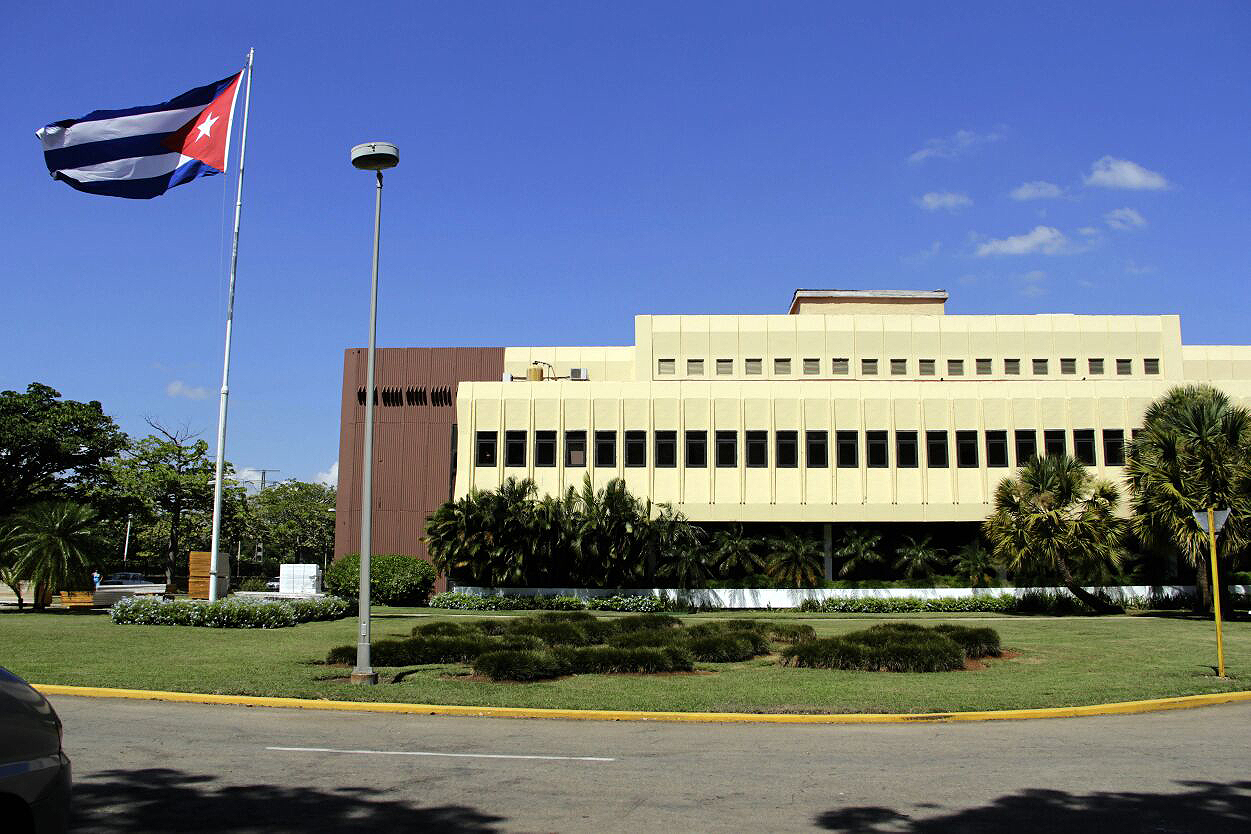
Centre for Genetic Engg.and Biotechnology,
Havana, Cuba

Havana,   is simpler,   a different   fragment of the spi
ke protein adsorbed onto aluminium hydroxide and suspended in suitable medium.  Such protein vaccines  do not require extreme refrigeration  and are cheap and easy to  manufacture. There are several other candidates in the Cuban pipeline including a nasal vaccine  Mambisa.


In Spanish Soberana means Sovereign and Abdala is a famous Cuban patriotic drama. The Mambises are those patriotic Cuban  soldiers who defended Cuba on several occasions.

In the meanwhile Cuba has embarked on vaccine diplomacy by exporting Soberana-02   and Abdala  to Venezuela,  Nicargua, Iran and Vietnam. It would like to extend this gesture of comraderie  to less privileged nations who are in dire need of the vaccine. For this World Health Organisation's has to give the nod.

Tailpiece

“Cubans either don’t meet the mark – or go way past it.”

(Words of General Máximo Gómez, a key figure in Cuba’s 19th-century wars of independence against Spain : Guardian  5th Jan. 2022)


REFERENCES

1. Cuba punches above its weight to develop its own Covid vaccines

2.Cuba soars to near top of COVID vaccination charts on decades-old bet

3. In world first, Cuba starts COVID-19 vaccine for toddlers

4. Cuba's bet on home-grown Covid Vaccines is paying off

Wednesday, December 8, 2021

COVID-19 Vaccine Stories I : Modern(a) Twists

The whole  World applauded when a unique  Public-Private Partnership  was forged.  The   US Governmental agency,  National Institutes of Health (NIH) and  Moderna the  American pharmaceutical company    joined forces   to confront the  COVID-19 pandemic. They began with a shared vision: to come up with a vaccine  against the deadly virus in the shortest time possible. The two have been in partnership for about 4  years in matters of health.  Everything went on as planned.  National Institute of Allergy and infectious Diseases  (NIAID)  under the umbrella of NIH readily shared their laboratory findings with Moderna and then  Lo and behold!    a vaccine  mRNA 1273 or Spikevax  was in the market in record time. 

Moderna Covid-19 Vaccine 
Courtesy: wikipedia
NIH put out a report    that "The incidence of symptomatic COVID-19 was thus 94.1% lower in participants who received mRNA-1273 compared to those receiving placebo........... The FDA  issued an Emergency Use Authorisation  for Moderna to make the vaccine available for the prevention of COVID-19 in adults on December 18, 2020."  Peer reviewed  results  appeared in the prestigious New England Journal of Medicine in Dec. 2020.   In May 2021, Biden administration even hinted at  waving patent protection on humanitarian grounds. Rachel Cohen,  director for the non-profit Drugs and Neglected Diseases initiative in New York City Cohen is reported to have said : “These vaccines are an unparalleled triumph for science, but if only 20% or 30% of the world winds up benefiting, what is the point of the innovation?”

This must have been the  point at which  relationship turned sour,  the distaste spilling out in the open.  Moderna went  ahead and filed  core patents  omitting the names of the NIAID  scientists.  This makes Moderna  sole owner of intellectual property and sole beneficiary of  the profits reaped  from sales.   Anthony  Fauci, Director of NIAID is emphatic that names of NIAID scientists should have been included as inventors in the patent application   because it was a collaborative work.  Moreover   Moderna had received to the tune of 1.4billion dollars of government funding ( tax payers' money) to develop and test the vaccine.  However  CEO of Moderna  claims, that his scientists independently  invented the particular mRNA sequence used in the  vaccine. While NIAID argue they have already  published similar results much earlier in 2017(see Ref.2).  

It appears that Moderna extended consolation  arm to NIH by offering  co-ownership. But legal experts say co-ownership and co-inventor status are not equivalent. There is much more in fine print for co-ownership.
Moderna Headquarters,
Cambridge, Massachusetts

Courtesy: wikipedia

Moderna was founded as ModeRNA Therapeutics  in  2010.    The name implies modified RNA  the focus of the  company. For Moderna it makes business sense   to have full and exclusive ownership on the patent because the  COVID-19 vaccine market is expected to be   $19.5 billion in another 5 years.  Add to  this the fact that   Moderna's product menu has only one item:.  COVID-19 vaccine.


Tailpiece:

Reliefweb states: "Moderna’s Q3 profit before tax for 9 months ending September 30 is $7.8 billion on $11.2 billion revenue giving a pre-tax profit margin of 70 percent. The company projects full year 2021 sales to be “between $15 billion and $18 billion”. Using the lower end of the estimate —70 percent of $15 billion is $10.5 billion in profit for 2021. The vaccine is Moderna’s only commercial product."


REFERENCES:

1. Experimental Coronavirus vaccine highly effective

2. Immunogenicity and structures of a rationally designed prefusion MERS-CoV spike antigen:  Jesper Pallesen et al (PNAS Aug 19, 2017)

3. What the Moderna–NIH COVID vaccine patent fight means for research

4. COVID-19 vaccine market set to touch $19.5bn by 2026

5. In shock move, US backs waiving patents on COVID vaccines

6. Covid-19: Moderna seeks to exclude US government scientists from vaccine patents, despite public investment

7. Moderna, escalating dispute with NIH, claims government had no role in key vaccine patent

8. Pfizer, BioNTech and Moderna making $1,000 profit every second while world’s poorest countries remain largely unvaccinated