Tuesday, April 2, 2019

Seeing (in the dark) is believing.

Perhaps because we humans were destined to be  diurnal and not  nocturnal species, evolution  didn't  equip us with night vision. Instead we received cone cells for  color vision,  ideal for enjoying the wide spectrum of colours in broad day light.  On the other hand  nocturnals  developed a thin membrane tapetum lucidum,  behind the retina which functions as a rear light reflector  enabling vision in low light and  during night.  None the less we humans know how to jump over natural barriers with the help of technology; thus we have   extended our working hours into the darkness of night and peeped through night vision goggles and infrared cameras to see what cannot be seen with naked eye.  Night vision devices are available in a wide range of  prices/functionalities.  

Because we  are bent upon following knowledge like a sinking star, beyond the utmost bounds of human thought,  we have breeched another barrier. No  not for ourselves, but  for rodents. A research team led by  neuroscientist Tian Xue at the University of Science and Technology, Hefei, China has given the power of  night vision to mice through an  ocular injection  of nanoparticles.  Xue says it started as a crazy idea.    Nano particles of ytterbium and erbium, two metals that belong to the rare earth group caught the attention of the team.  Ytterbium can absorb infrared light and transfer it to neighbouring erbium which in turn responds with the emission of  green light. The team tagged these nanoparticles with a protein called ConA which preferentially attaches to the surface of photoreceptor cells in the retina  This concoction was injected into the rat's retina.  ConA latches on the retinal cells.   Once safely anchored there,  ytterbium and erbium nanoparticles work in unison converting infra red signals to green light which retina picks up, converts to electrical signals and sends to visual cortex for processing and decoding.  Xue and team ran a series of experiments to monitor the behaviour  of rats in dark and infrared light lit chambers. These experiments  proved conclusively  that the injected mice  could actually see in the dark. 

A concept has been proven and a patent has been applied for.  Xue et al are confident  of the  civilian and military applications of the technique.    It is indeed  debatable whether night vision would improve  the quality of human  life;  but certainly ghosts would scramble  to  hide in plain sight. 


Reference 

  1. Mammalian Near-Infrared Image Vision through Injectable and Self-Powered Retinal Nanoantennae.                                                                                                                   Cell, 2019; DOI: 10.1016/j.cell.2019.01.038 Yuqian Ma, Jin Bao, Yuanwei Zhang, Zhanjun Li, Xiangyu Zhou, Changlin Wan, Ling Huang, Yang Zhao, Gang Han, Tian Xue.
2. Researchers enable "Super Mice" to see Near-Infrared Light

Friday, March 1, 2019

Dance Lessons for Humanoids

The website of Boston Dynamics features several videos on the acrobatics of Atlas, the Humanoid. With a height of 1.8 meters supporting a weight of 75 Kg, Atlas has a total of 28 joints and runs on battery power. It walks, runs, jumps, somersaults. Kengoro, the latest humanoid  from University of Tokyo, is 1.7 meters tall and 56kg in weight, and is fitted with  160 motors for anatomical flexibility. Kengoro has a unique cooling system which allows it to sweat.  But both sorely miss out on  aesthetics.     Perhaps  aesthetics was remote from the minds of their designers. 

Atlas,
Courtesy: Wikipedia

Sophia,
Courtesy: Wikipedia
Sophia, the humanoid designed by Hanson Robotics is a study in contrast. Modelled on the yesteryear British actress Audrey Hepburn, Sophia has more humanlike features.  Media is brimming  with her social capabilities.  The Hanson website states that  Sophia, (which means wisdom in Greek) is designed to achieve  meaningful   collaboration between humans and Artificial Intelligence.  Miim, very Japanese in her attributes is petite, with  just 158 centimeters in height and 43 kg weight. She can walk, speak and even dance.  She is the creation of National Institute of Advanced Industrial Science and Technology (AIST), Tokyo.

Current projections estimate that by 2025, robots will execute  25% of manual labor. However socially assistive robots in health and services industries need to be endowed with more human-like traits. One of the areas design engineers need to focus is robotic movements. The movements of the robot/humanoid are  jerky and abrupt.   It is necessary to impart more fluidity to these movements.  Muscles which smoothly contract and stretch allow humans to move gradually, gracefully.   Briefly reviewing the trends in the field  of Humanoid Designs, Amy La Viers, ( Director of Robotics, Automation and Dance Lab at the University of Illinois at Urbana-Champaign) observes that "The diversity of robot movements needs to be expanded  to include variable and complex motions."  She suggests that  roboticists must work in collaboration with dancers and choreographers to refine the movements of the robots.
3. How to make a Humanoid Robot Dance?
4. Make Robot motions natural : La Viers, Nature pp 422-424 Vol.565 January 2019

Sunday, January 27, 2019

A Twist: At a Magic Angle

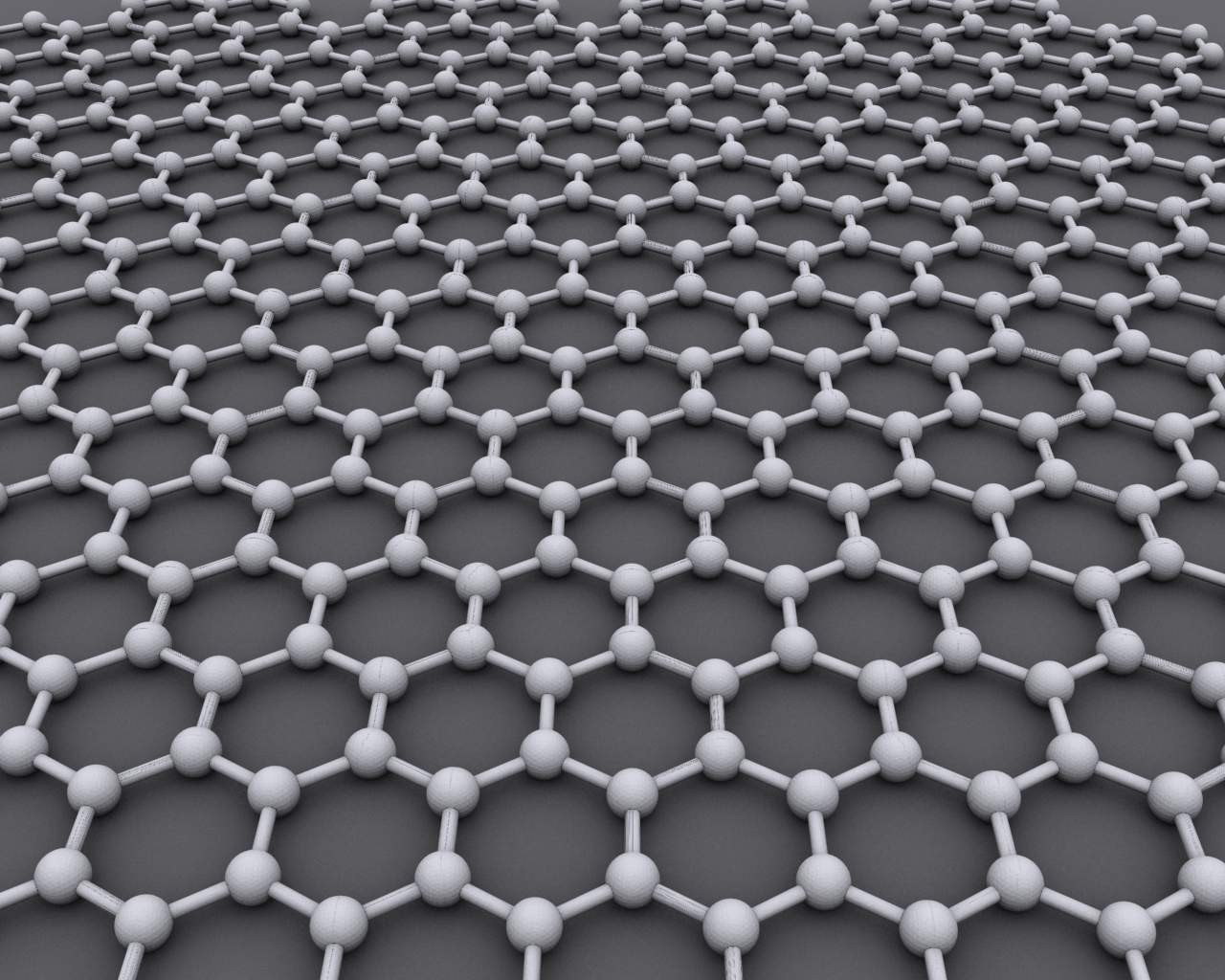
Graphene Artist's representation
: Courtesy Wiki
It is unbelievably true. A small twist,  hardly 1.1degree and lo and behold you have a superconducting material. Scientists have been trying tirelessly to tame the phenomenon of superconductivity and to make materials that exhibit this property at room temperature.  Not that we are anywhere near room temperature  as yet, but something amazing has caught the attention of scientists. And it is about graphene  sheets.

Everything about Graphene has been unconventional,  from the very beginning. Graphene is a mono layer of carbon atoms  arranged in a hexagonal format. Scientists   Geim and Novosilov  (who later received the Nobel Prize in Physics 2010) were the first to  peel off such layers from a graphite lump using a scotch tape. 

A team of scientists 12 years ago demonstrated that  graphene  bilayer could be turned into  a tunable  semiconductor when a small electric voltage is  applied  across the sheet. 
And now MIT Professor  Pablo Jarillo-Herrero and his team of students are flying high as they  demonstrate that a slightly misaligned pair of graphene sheets, cooled to almost absolute zero, could switch its behaviour  between an insulator and an unconventional  Superconductor, when a voltage is applied.  

A slight twist of 1.1 degree- as simple as that?, Scientists all over the world are wondering.  At the recent Annual Meeting of the American Physical Society, when Jarillo-Herrero presented his results, the lecture hall was overflowing; audience spilled over and  stood wherever they could, to  hear him talk.  The theory behind the phenomenon remains to be worked with the rigour it demands. However the general assumption is that the 1.1 degree twist  drastically alters  the electronic properties of the ensemble. Graphene is a pure clean system and scientists are confident that it  is an easier system to study than those complicated mixed oxides which have earlier exhibited such property. 

Twistronics is the buzz word now.  As one scientist puts it everyone is taking their favourite thing and twisting it with their other favourite thing, all in the hope of striking  it rich with superconductivity.


References:
1. Insulator or Superconductor? MIT News 
2. Superconductivity with a twist: Gibney,E.; Nature 2019, 565 pp15-18
2. Y. Cao et al., “Correlated insulator behaviour at half-filling in magic-angle graphene superlattices,” Nature 556, 80 (2018).
3. Y. Cao et al., “Unconventional superconductivity in magic-angle graphene superlattices,” Nature 556, 43 (2018).
4.Carr et al., Twistronics : Manipulating the Electronic Properties of Two-dimensional Layered structures through their Twist Angle  APS March Meeting 2017 Abstract E33.003


Wednesday, November 28, 2018

When Machines face Moral Dilemma

Many believe that driverless cars or autonomous vehicles (AV) are just around the corner. Trial runs have been conducted, still  there are several more hurdles  to tide over  before they can meet  specifications set by SAE, (Society of Automobile  Engineers).   SAE classifies automotives into 6 levels  beginning with level 0 where the human driver is all  in all and level 5 where human is just a passenger .  According to  the NHTSA website (National Highway Traffic Safety Administration, USA)  Level 5 vehicle is " An automated Driving System (ADS) on the vehicle (which) can do all the driving in all circumstances. The human occupants are just passengers and need never be involved in driving". 

"Just passengers"? -  well that is interesting; I foresee a future when Driving Licence becomes redundant. But that  brings up  several intricate questions too.  True, AVs will be designed with super safety features.  But after all these are mechanical-electronic contraptions and hence breakdowns and/or  accidents cannot be eliminated altogether. How will the  insurance policy be formulated?  Who should be held responsible? Surely passengers can't be guilty.  Should a mandatory  AMC replace the insurance cover? If so, would the manufacturer be liable?   The answers are not yet  in place. 

AVs will have to share  road-space with  human-driven vehicles, pedestrians, pets, stray animals etc. hence  they should be equipped with enough  Artificial intelligence(AI)  to meet all possible eventualities.  Let us imagine a scenario of  an AV is  negotiating  a busy market street.  An accident is imminent and  unavoidable;  whether the vehicle stops or swerves    lives will be lost.  How should  the algorithm for  solving this dilemma be written-   to save the lives of the few passengers within or the  many pedestrians on the road?  To save   the elderly over  the young;  the rich rather than the poor;  the females  and not the males? It is indeed a frightening task to write algorithms that define machine ethics.  To write a moral code for the AI system, it is necessary  to know how humans make moral judgements.  Almost every component  one can think of,  social background, age, gender,  education level, prosperity, cultural traits etc. influences an individual's thought process and the ethical choices he/she makes. For the human mind it is a dynamic process and not confined within the commands  of an algorithm.   But is there a pattern?  Can we ultimately define  a Global Moral Standard ?

That is what Awad et al set out to map. They floated an  online  questionnaire  in 10 languages. There was  only one question but nine situations; each situation  had just two disasters  to choose from.   If an  accident and subsequent  loss of lives  are  unavoidable should  one try to save   a) humans or pets;    (b) passengers or pedestrians (c)  the young or the elderly (d) abled or disabled (e) male or female (f) few or many (g) rich or the poor. Their results  titled The Moral Machine Experiment appear  in a  recent issue of Nature. The online survey generated  close to 4 million responses spread over 233 countries/territories/societies.  In spite of overlaps and cross overs  Awad et al  could arrange the collage into 3  clusters: the Western, the Eastern and the Southern.  The Western  cluster included North America and most of  the European countries except France; the Eastern cluster spanned  the geographical east from Japan to Middle East and the Southern cluster  consisted of Latin American countries, France, old French colonies, Hungary, Slovakia, Czech Republic etc.  

Awad et al conclude that despite the diversity of responses they could  detect three strong preferences across the clusters : "the preference to save humans; the preference to save more lives; the preference to save  young lives."   

REFERENCES: 
1. The Moral Machine Experiment : Awad et al Nature 563, pp 59-64  (2018)
2. The social Dilemma of autonomous vehicles: Bonnefon et al; Science 352, 1573-1576 (2016)
3. Cultural differences in moral judgement and behaviour across and within societies: Graham et al , Curr.Opin. Psychol.8, 125-130 (2016)


Sunday, October 28, 2018

How Old Are You?

Simple, straightforward question; but often the answer isn't either.   If only we could develop an Agemeter (or should it be Ageometer? )  just like the thermometer  for body temperature!. An  ageometer   with a  precision of 0.5  to give readings like 17.5,  18.0, 18.5, 19 .....    Age has always been important from the  medico-legal angle,  because  it bestows  varying levels of  rights and responsibilities on children, juveniles and adults and at times senior citizens. Currently a combination of methods are used to assess the age of an individual - examination of teeth, wrist bones etc.  But the error margins are often 3-4 years. 

Age Factor  has now spilled  beyond  medico-legal boundaries into  geo-political and socio-economic arena.  The recent mass  influx of refugees into  Europe is the single biggest  thrust  factor.   According to  recent reports  Europe has close to 4 million refugees.  As per the UN requirements,  asylum seekers   under the age of  18 are eligible for special benefits and that means  a drain on national resources.   A population fleeing from its war torn homeland can't  think of,  let alone pause to pick up  passports or birth certificates. Moreover families get separated often with none to vouch for the age of  orphaned youngsters. There is widespread   feeling that  refugees  deliberately forge their age to qualify for special benefit package.  With nationalism on the surge all over the world, resentment  against refugees are flaring up everywhere. 
    

It is in this context that  the Epigenetic Clock proposed  by Professor Horvath  (Dept. of  Genetics and Biostatistics, University of California, Los Angeles, USA) catches global attention.   There is scientific concurrence that   DNA methylation levels (referred to as DNAm), could be a measure of  the mammalian ageing process, though   the "How" and "Why" of the correlation remain blurred. Methylation  happens at the  cytosine nucleotide linearly attached to a guanine nucleotide. These are referred to as CpG sites.    Methylated CpG sites are thus  biomarkers, which have the potential to turn off genes. In his approach Prof Harvoth used  a special machine learning method  to identify  the biomarkers  located at informative genomic locations and then  an algorithm to predict the biological age.  Initially selecting  353 such sites,   Prof Horvath  demonstrated that this  method  could spell out the biological age for a majority of tissue  samples with a median error of 1.03 years.  However it is also a fact that  there were outliers with error margin as high as 5 years.  While scientists are focusing on improving the accuracy of the method,    Zymo a company based in Irvine, California bought exclusive rights for the technology.  DNAge Epigenetic Aging Clock service is now available for US$299.     

Tailpiece
The Old Town Hall  is one of the oldest buildings in Prague, dating back to 1338.  The astronomical clock installed in 1410  is the oldest, still ticking  astronomical clock in the world. 


Town Hall Tower with the
Astronomical Clock  


REFERENCES:


Sunday, September 30, 2018

Clearing the Waste : How the Brain does it

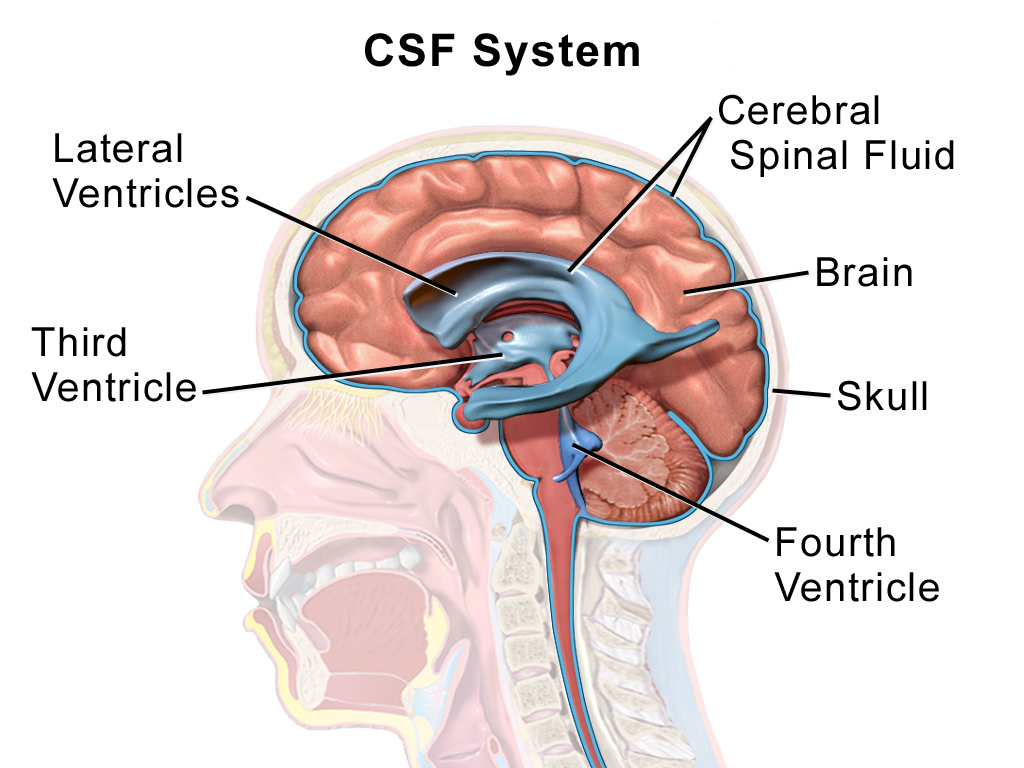
Hippocratus (460- 370BC) had alluded to a water channel that encircles the brain. But  it took  2000+ years for scientists  to  put together, piece by piece, a detailed  picture highlighting  its  physiological significance.  Thus now we refer to  the clear liquid  that "waters" the brain and spinal cord as  the cerebro-spinal fluid, CSF for short. Specialised  ependymal cells   in the inner cavity of the brain produce this liquid in  pulses.  Chemically   CSF is very much like  serum but with one major difference.  The Protein content in serum could be as high as 7000mg/dL, whereas CSF registers only about 35mg/dL.  We also know that CSF fulfils  multiple responsibilities in the brain, such as cushioning the brain, preserving its buoyancy, supplying nutrients   and   scavenging  waste.  The  complex network of channels through which CSF flows, together with  its associated  glial (neuronal) cells,  is collectively known as  the Glymphatic System.   As recent as in  in 2015, scientists spotted lymphatic vessels in the meninges too.  Meninges is  the three tiered protective  cover that shields   the brain and the spinal cord. It is now realised that the menengeal lymphatic  system  closely collaborates with the glymphatic system in waste removal from the brain.   
Courtesy: Wikipedia 

The CSF sweeps up the waste  and later  gets  partly absorbed into the venous circulation and partly   drained into the lymphatic system for downstream processing.  In young healthy adults, this process is rapid and regular.  But with age the process becomes sluggish and waste gets accumulated. A typical case in study is the Alzheimer's disease,  in which  amyloid plaques accumulate. This  debris in turn  interferes with and impairs neuronal function and also clogs the drainage pathway.  Of course it could as well be a combination of over-production of amyloid plaques and under performance of the clearance system.

Scientists were indeed astonished to find that the  glymphatic system is mostly dormant when we are awake and gets into fully active mode only when we are asleep.  Using sophisticated imaging techniques, it has been  demonstrated that the rate of waste clearance from the brain  increases by about 60% during the sleep cycle. Hence the extrapolation by Xie et al   that  the restorative function of sleep may be a consequence of the enhanced removal of potentially neurotoxic waste products that accumulate in the awake central nervous system. Scientists are exploring  the possibility of clearing the choked pathways as a novel approach for  managing  neurodegenerative diseases such as  Alzheimer's. 

Tailpiece:

It has been found that healthy bones  facilitate the production of  osteocalcin, a hormone necessary for memory retention.  Prof.Eric Kandel,    who received  Nobel Prize in 2000 for unravelling the neurological pathways of learning and memory, has this to say:  "If you walk two or three miles a day, you will release sufficient osteocalcin from your bones to combat non-Alzheimer's, age-related memory loss"

REFERENCES:


Saturday, September 1, 2018

The History and Chemistry of HOPE

Diamonds are rare; blue diamonds are even rarer, constituting   less than 0.2% of naturally occurring  diamonds.   Experts say that  there are only a handful of notable blue diamonds in the world. And  Hope  tops that list.  This  most unique, priceless,  brilliant  deep blue diamond  is  currently  held  most securely  at the  Smithsonian Museum, Washington DC.  More than 350 years ago, John Baptiste Tavernier,  a  French trader, traveler, fortune hunter held it in his palm and  exclaimed at the  beautiful violet,  but the usual color qualifier has always been Blue.   
  
Hope Diamond with lighting  (Courtesy Wiki)
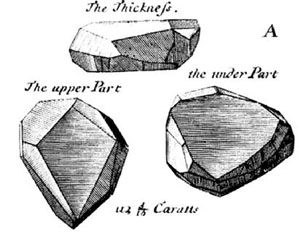
The birthplace  of Hope  diamond has been identified to be  the mines of Golconda, India. Sometime during the   seventeenth century (some say1640), Tavernier reportedly  appropriated  a large, 112.5 carat  uncut blue crystal from a local. Tavernier  later traded it  for a price and position  to the French emperor  Louis XIV.  The king had it  chiselled and set  to a triangular shape of 67.2ct. It acquired the name  French Blue and  remained among the French Crown jewels until  revolution broke out in the  1790's.
 Tavernier's original sketch of French Blue Courtsey: wiki 


During the revengeful  loot and plunder of the royal household by the enraged  masses, French Blue  disappeared along with other crown jewels.  Later  during the early part of nineteenth century a brilliant blue stone surfaced in the London jewellery market. John Francillon, an English jeweller had his suspicions. There were speculations that this was indeed the French blue. However  whosoever owned it in the interim period had it reduced  in size  to 45.52 ct  and reshaped it - perhaps to escape  knowledgeable eyes-  before floating it in the market.  The blue stone eventually became a part of  the English crown jewels collection.  In 1830, Henry Philip Hope, a wealthy banker  purchased  it from the  English King George IV, purportedly as part of a debt settlement.   The gem acquired a  new, permanent  identity The Hope Diamond, a name that didn't change any further with changing ownership.  In 1958  Hope Diamond was donated   to the Smithsonian Institution, Washington, DC, by the then owner.

So much for the history of Hope. Its  chemistry  (and also of all natural blue diamonds) is  equally interesting.  Chemists were fascinated by the brilliant blue and embarked on the job of identifying the cause. In 1971  it was established categorically that traces of boron   imparted the  blue colour and not aluminium as was believed till then.  It was also seen that  boron would  impart blue colour, only in the absence of other impurities. Hope diamond  underwent a systematic, rigorous  scientific grading by the Gemological  Institute of America (GIA)  in 1988.    Non-destructive spectroscopic techniques such as Infrared, Ultraviolet and  Pulsed luminescence were used to estimate the boron content.  Hope recorded  a value of 0.6 ppm boron (parts per million). Diamonds are in general insulators, but natural blue diamonds are p-type semi-conductors.  Because trivalent boron in  a  lattice work of tetravalent carbon leaves vacant slots, i.e. holes which facilitate electron jumping.    

While chemistry was thus explained, geochemistry still remained elusive for a long time. Because  boron is available only in the continental and oceanic crust which run to   an average  depth  of roughly 65 kilometres only.  Whereas diamonds are known to be formed at a depth of 100-250 kilometres, in the upper mantle. Several studies alluded to an even deeper zone, a depth of 660 kilometres, for blue diamond formation.  So how did boron travel so far  down?  Perhaps we have an answer now. "Geological pathway for recycling of Earth's surface materials  into the mantle are both driven and obscured by palte tectonics" contend  Smith et al  in the August 2nd issue of Nature Magazine.  When continental crust slides over the  oceanic crust, lithosphere rich in rocks and minerals  gets  pushed down through serpentine pathways  into the lower mantle. 

Geological process of subduction: Courtsey wikipedia                                                                                                                                                    Author: K. D. Schroeder Subduction-en.svg from Wikimedia Commons                                                                                                                                  License:Creative Commons Attribution-ShareAlike 4.0


References:


4. Blue boron-bearing diamonds from Earth's lower mantle : Smith et al Nature 560, 84-`87, 2018